The LIGHT HUNTER – A Personal Tribute to Fatali

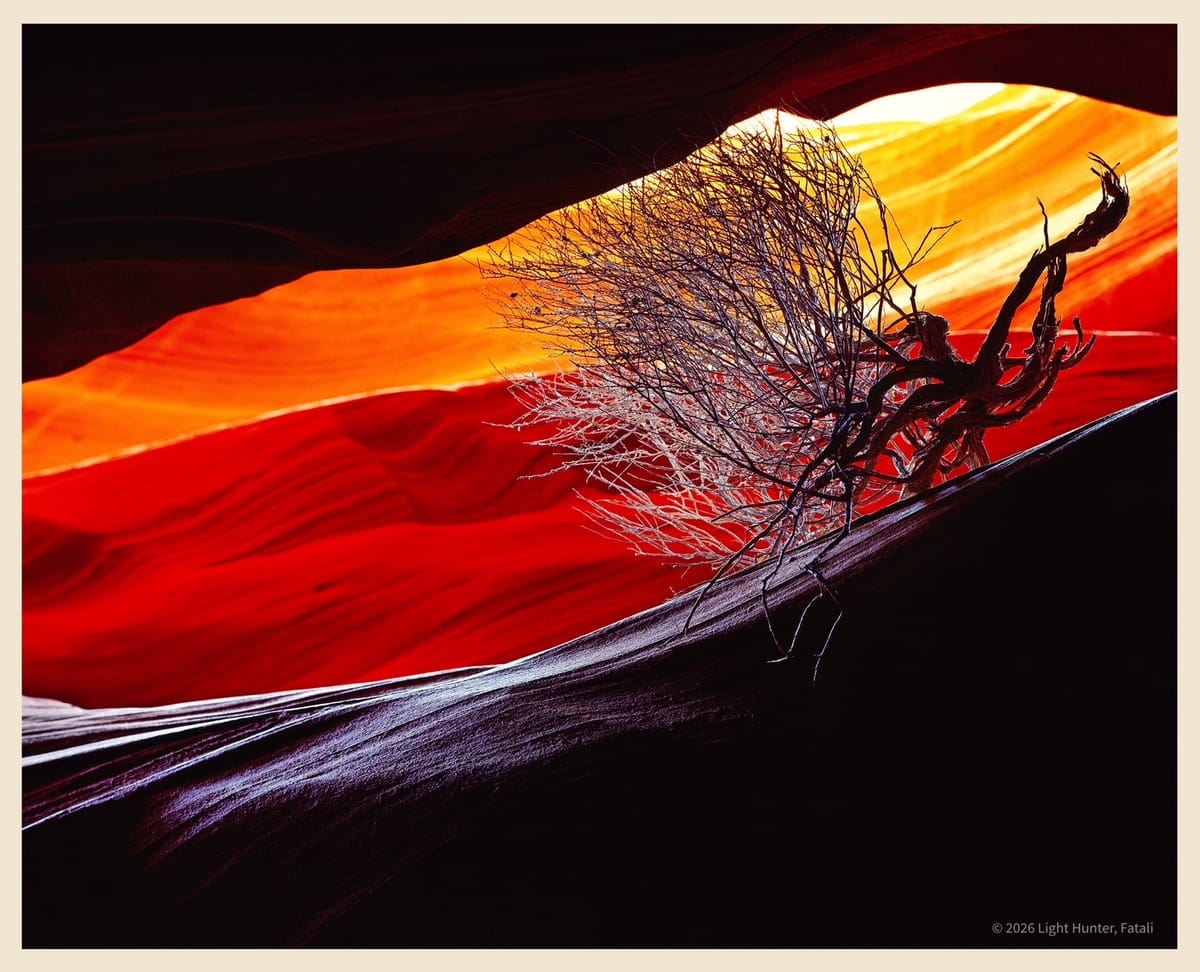
Sometimes you encounter an artist and you know immediately: this is no ordinary photography.
It was 2003 when I first visited Michael Fatali's studio — back then near Zion National Park, in that strangely beautiful in-between space of red rock, vast sky, and desert-dry silence. I still remember the moment clearly when I first stood before his large-format Cibachrome prints. Not reproductions. Originals. Made by hand, from large-format slides, through an elaborate darkroom process. The colors — that deep, luminous, almost otherworldly orange of the sandstone canyons, the blue above the mesas of the Colorado Plateau — didn't seem photographed so much but distilled.
In 2006 I was there once more. And since then, I have never forgotten Fatali.
Who is Fatali?
Michael Fatali was born in 1965. In 2017 he officially abandoned his given name and has called himself simply Fatali, The Light Hunter ever since. That name is no marketing invention: it was given to him by Navajo Indians in the early 1980s, when he was among the first explorers of the slot canyons along the border of northern Arizona and southern Utah. Those narrow, spiraling sandstone passages — of which the Lower Antelope Canyon is now world-famous and overrun with tourists — Fatali was there before a single tour bus arrived. He rappelled on ropes into unknown depths and photographed with large-format cameras a world that almost no one knew.
That early imprint — a teenager who sought solace and meaning in the wilderness after the death of his mother — perhaps explains why his images never feel like mere landscape photography. There is always something spiritual about them, almost meditative. Light for him is not a technical element but an object of experience.
For over 40 years he has roamed the national parks and wilderness areas of the American Southwest. Zion, Bryce Canyon, Antelope Canyon, The Wave, Capitol Reef — places many photographers visit, but which Fatali experiences with an intensity and patience that shows in every image.
Large Format and Cibachrome — a Dying Art
What sets Fatali apart from most landscape photographers is his unwavering commitment to analog large-format film and the Cibachrome process (also known today as Ilfochrome). The Cibachrome process is considered one of the most color-stable and highest-quality printing methods in existence — rich in color, high in contrast, with a brilliance no digital print can reproduce. The slides Fatali works with are large-format (4×5 to 8×10 inches), enabling a sharpness and depth that even high-resolution digital cameras cannot fully match.
The process is laborious, expensive, and largely extinct. Fatali is one of the very few photographers still active who has mastered it and uses it consistently for his original prints. He explicitly refers to these works as Photographic Heirlooms — pieces meant to last for generations.
I am not a photographer. But I know what I see. And I know that a Fatali print on a wall is not simply a picture. It is an experience in color and light.
Rediscovered
Twenty years have passed since my last visit. By chance — as these things often go — I recently came across Fatali again. A new website, a new newsletter, a new name, but the same obsessive devotion to light. He has since moved; the studio beside Zion no longer exists in its former form. Instead, he now runs his Light Ranch, offers workshops through his Light Hunter Academy, and sends out a personal newsletter (My Light Story) in which he writes about his travels, his spirituality, and his craft.
The new website — lighthunter.com — feels different from anything I remembered. Less gallery, more biography. More human, less myth. I like that.
Why This Text?
I am not writing this because anyone asked me to, and not because I want to sell anything. I am writing it because some encounters stay with you. Because a studio in the Utah desert in 2003 changed my understanding of what a photograph can be.
Fatali is, to me, one of the most important landscape photographers of the American Southwest — not because he is famous (though he certainly is, with more than 60,000 collectors worldwide), but because he is consistent. Because he did not chase the digital mainstream. Because he has preserved a wildness that you can feel in his images.
Anyone interested in landscape photography, in the national parks of the Southwest, or simply in extraordinary images, I recommend a visit to his website — and above all: subscribe to his newsletter.
Website: lighthunter.com
Newsletter: mailchi.mp/fatali/mailing-list
Earlier website (still active): fatali.com
Because I find Fatali's photographs so extraordinary, I wrote to him and asked whether he might allow me to use one of his images as a header for the blog. He was delighted by my message and touched to hear that his pictures had left such a lasting impression after so many years. Fatali then sent me an entire selection of his most beautiful shots and gave me permission to show them here in the article. Many heartfelt thanks for that!
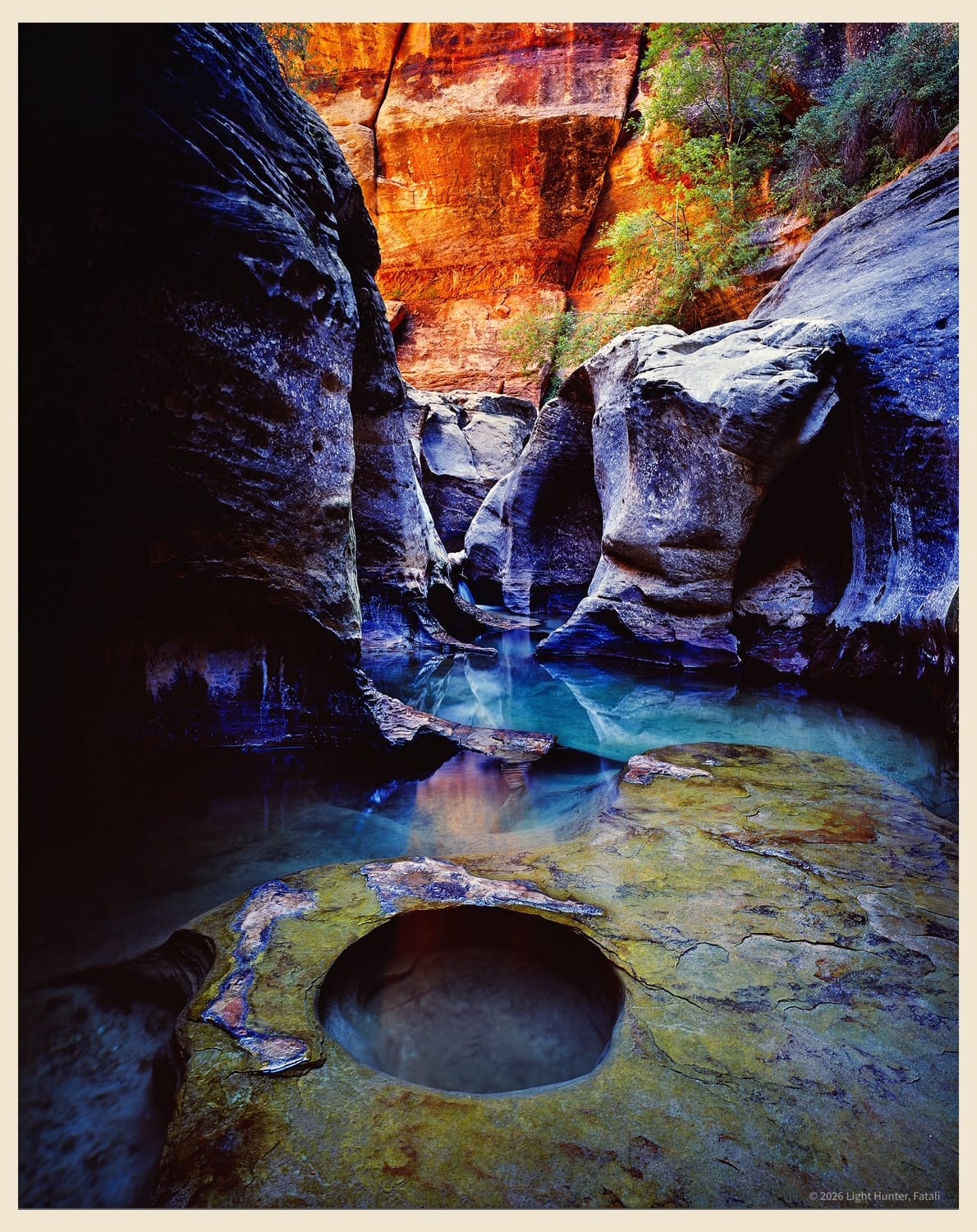
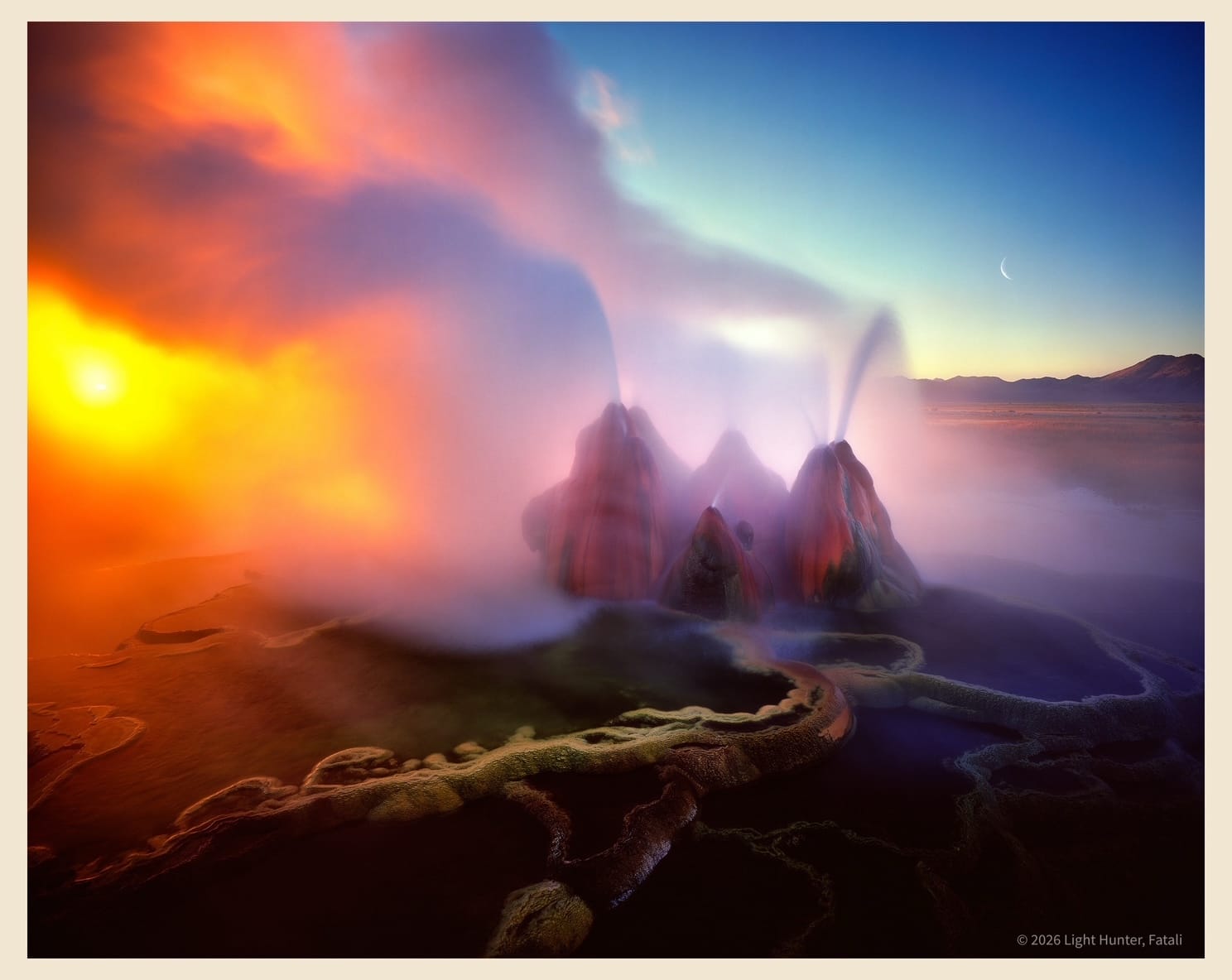
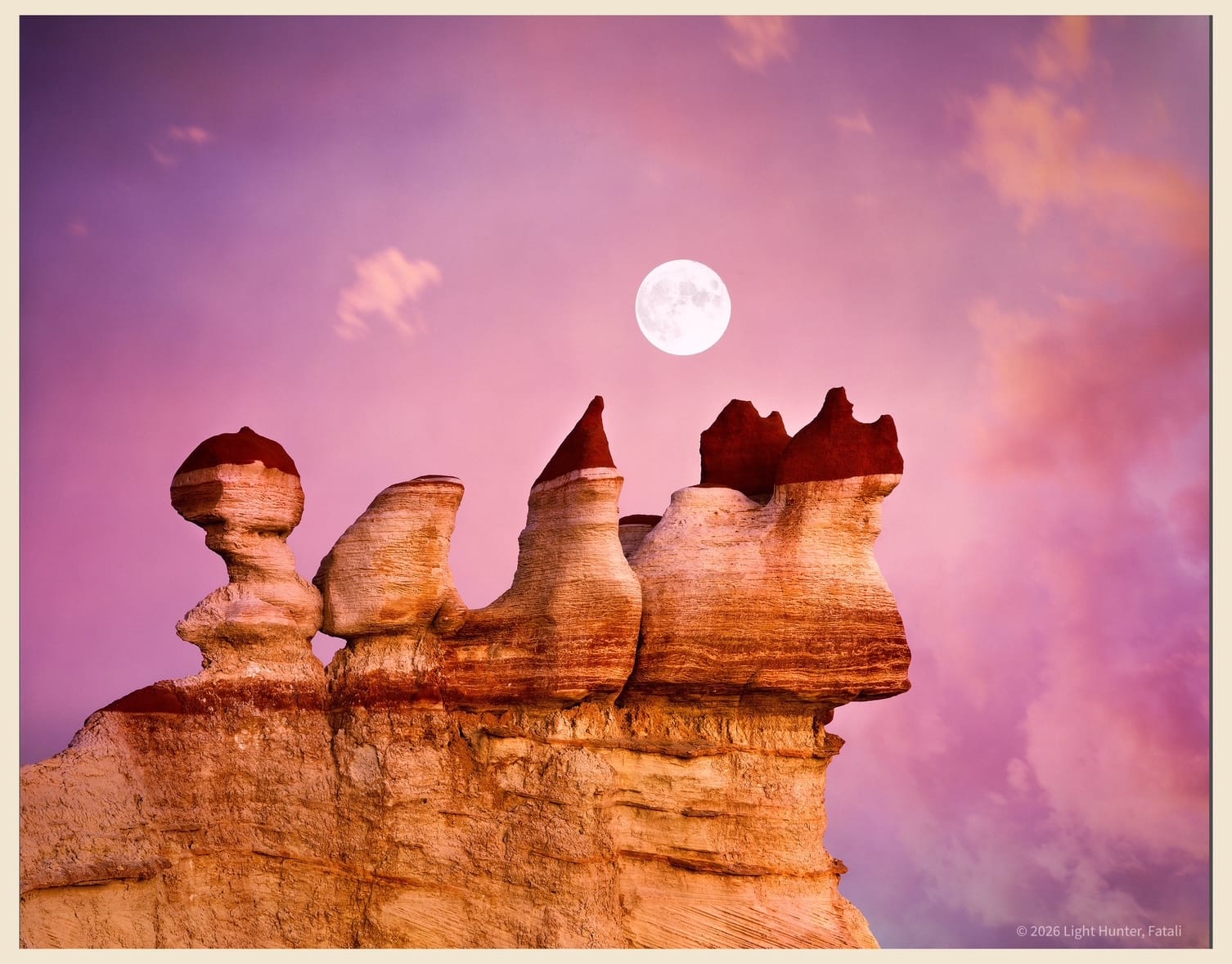
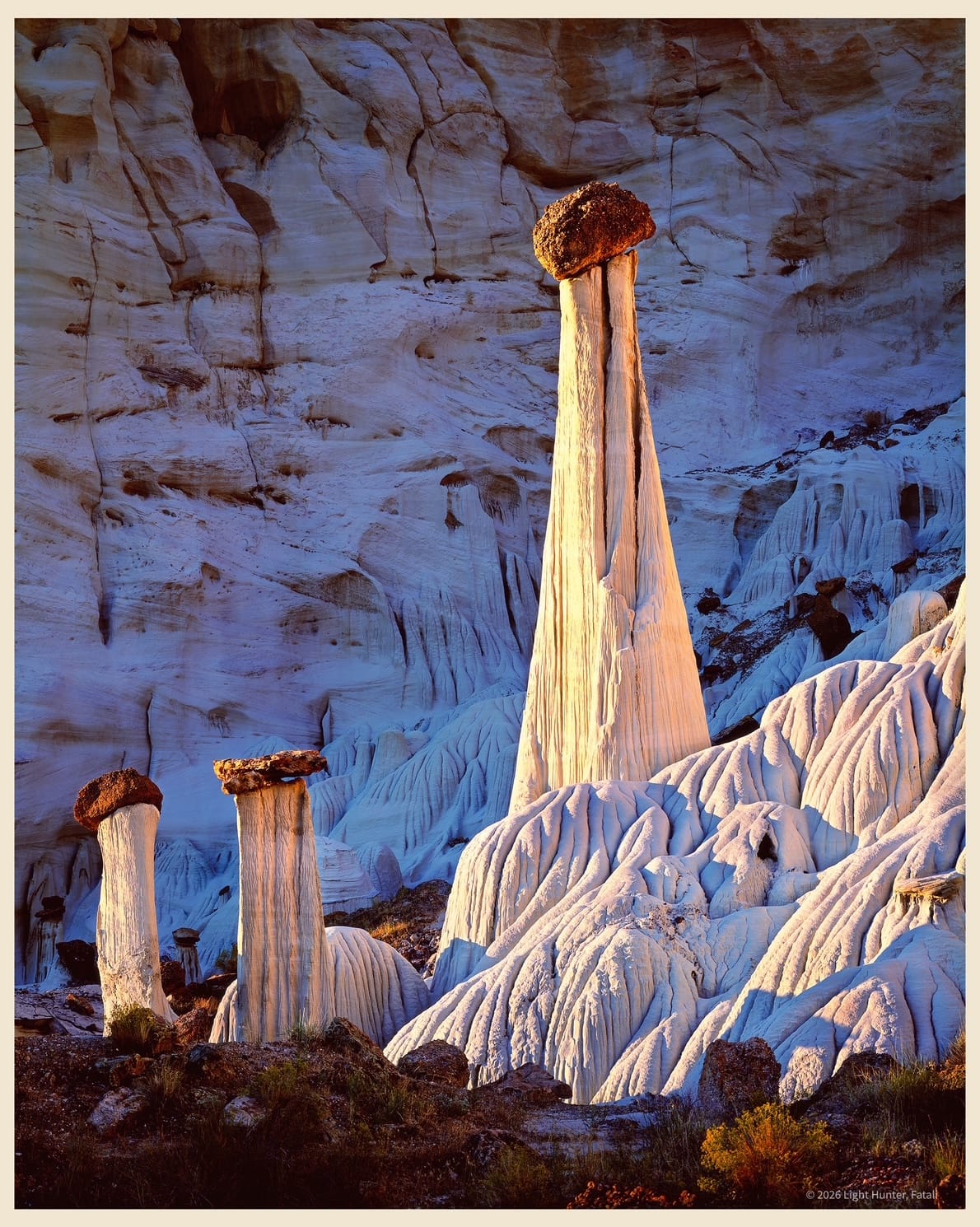
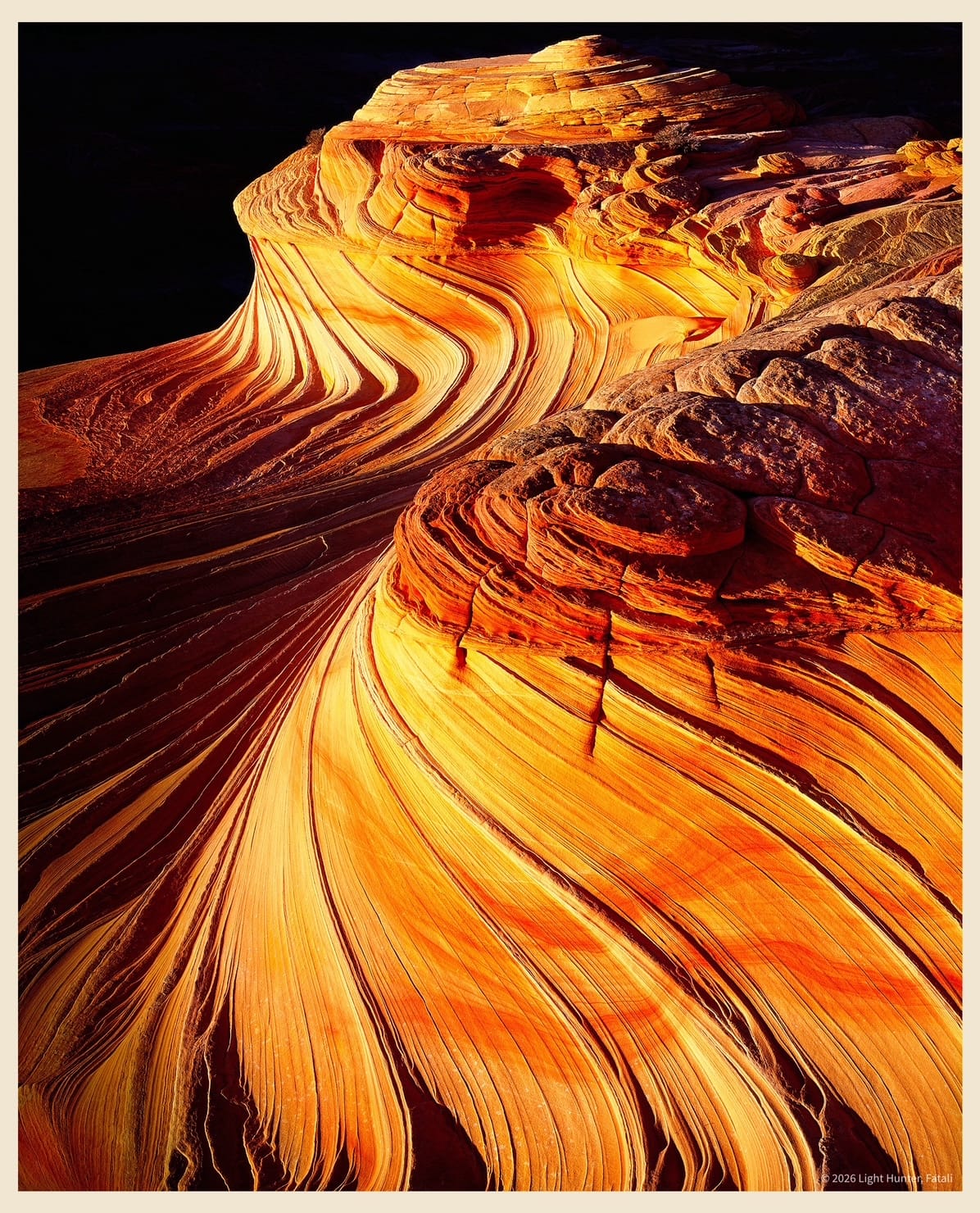
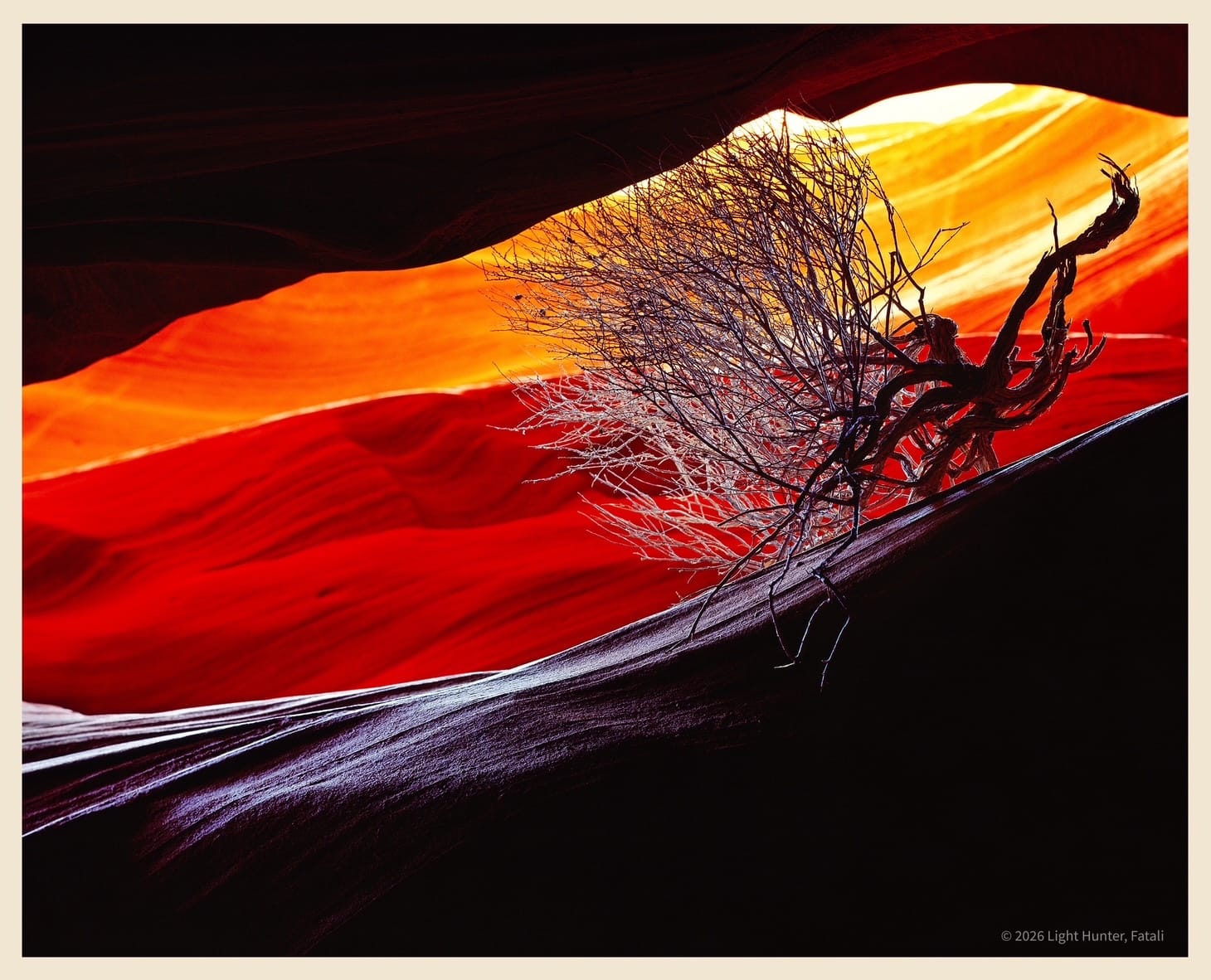
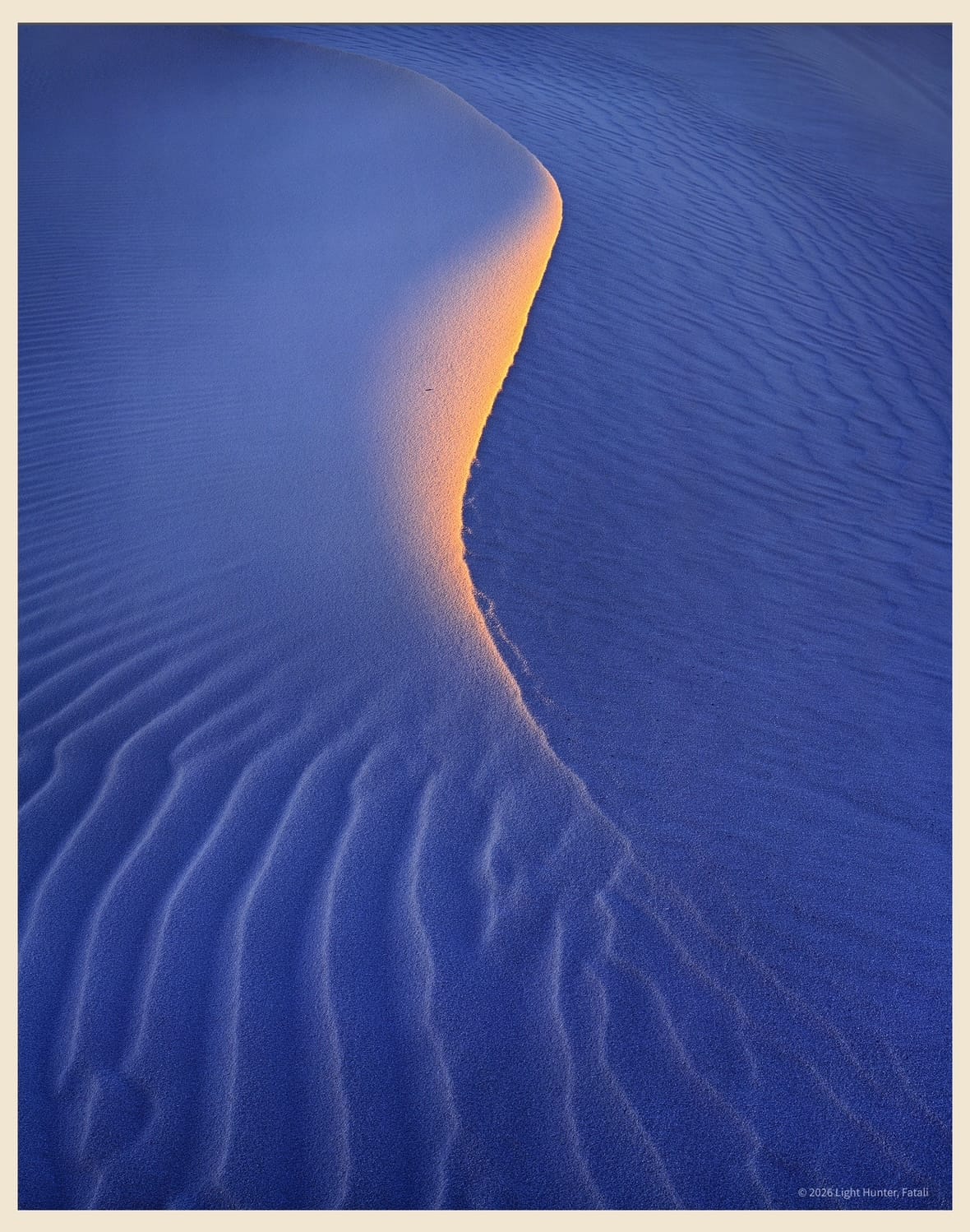
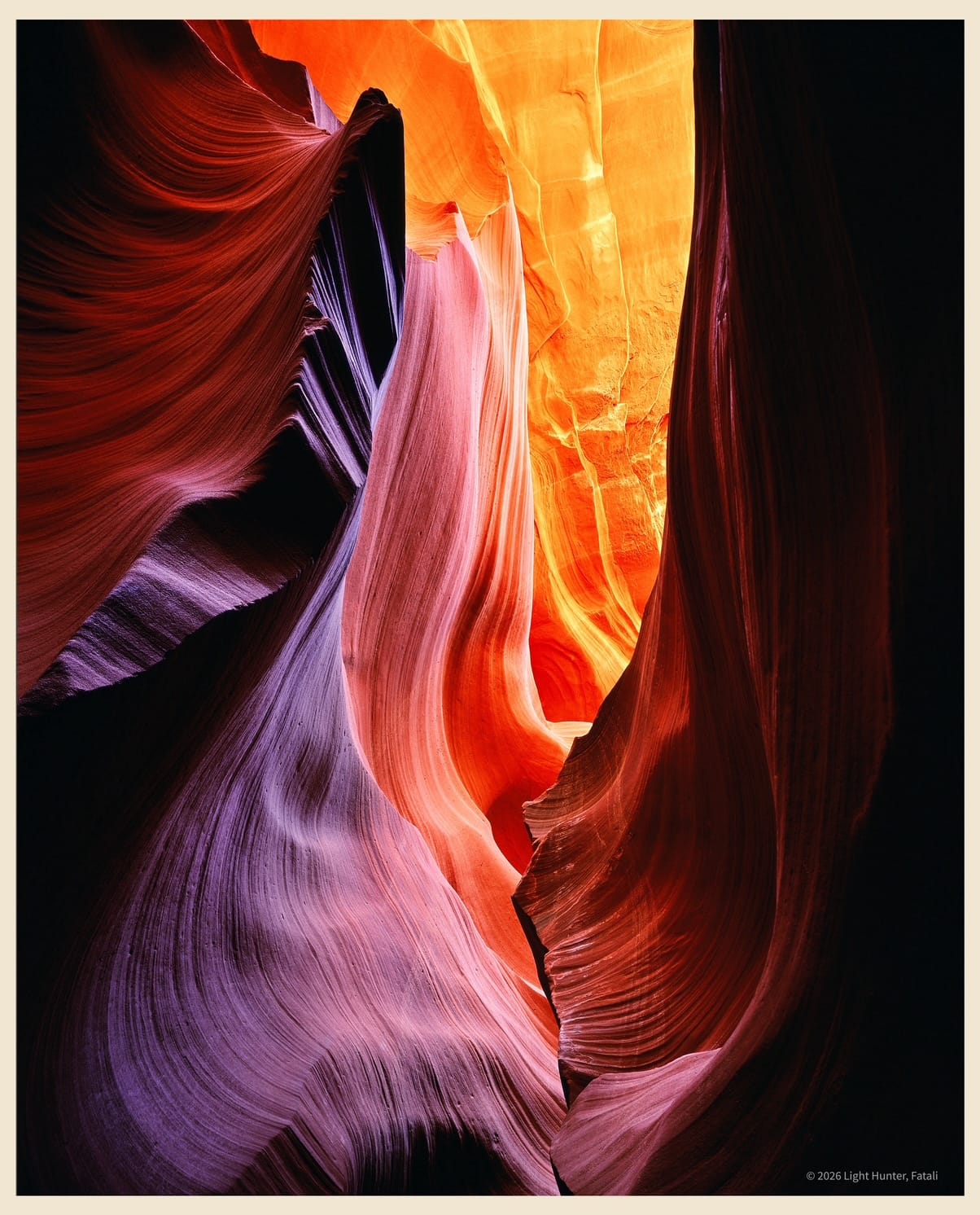
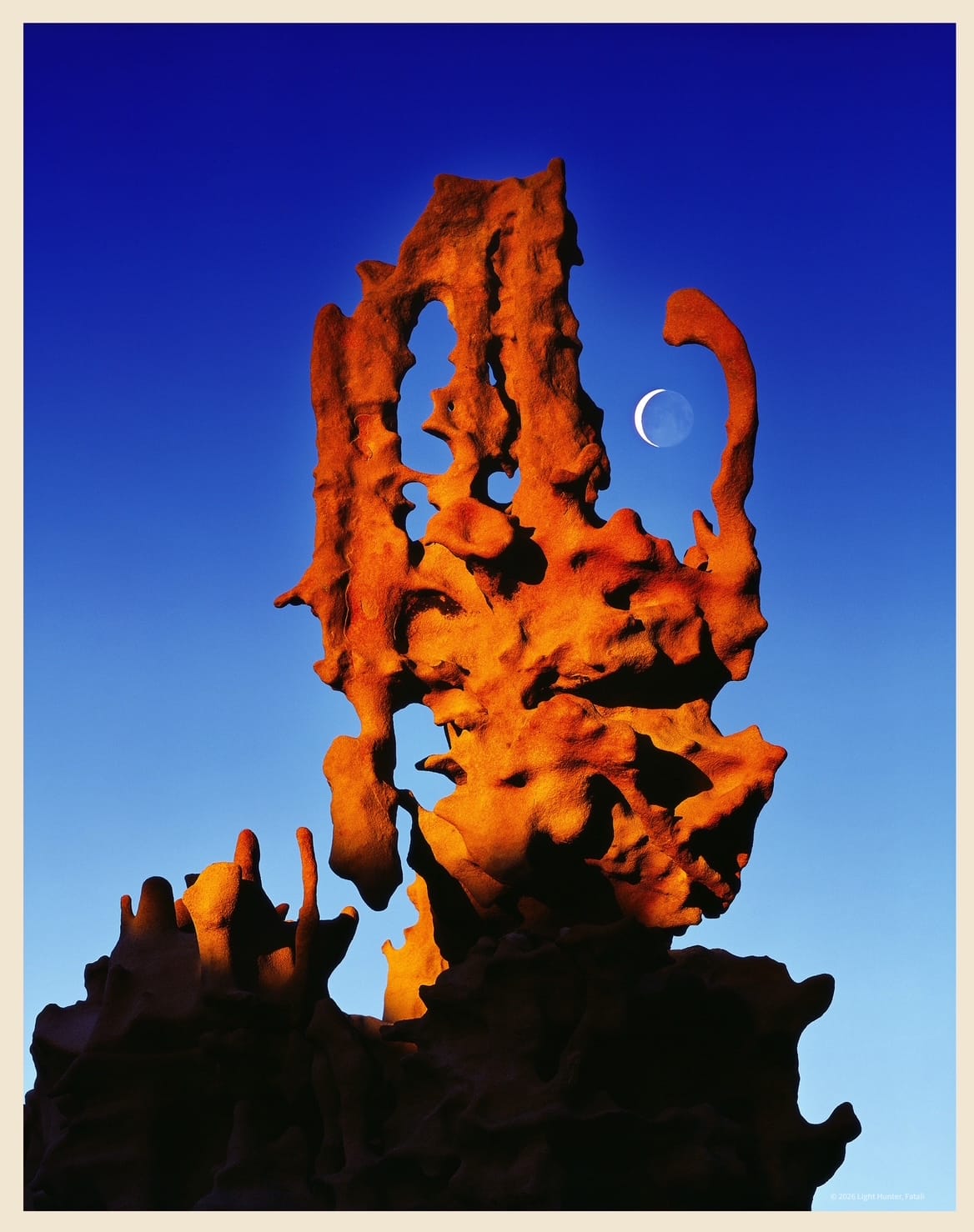
With kind permission of Fatali — The Light Hunter, https://lighthunter.com/home